










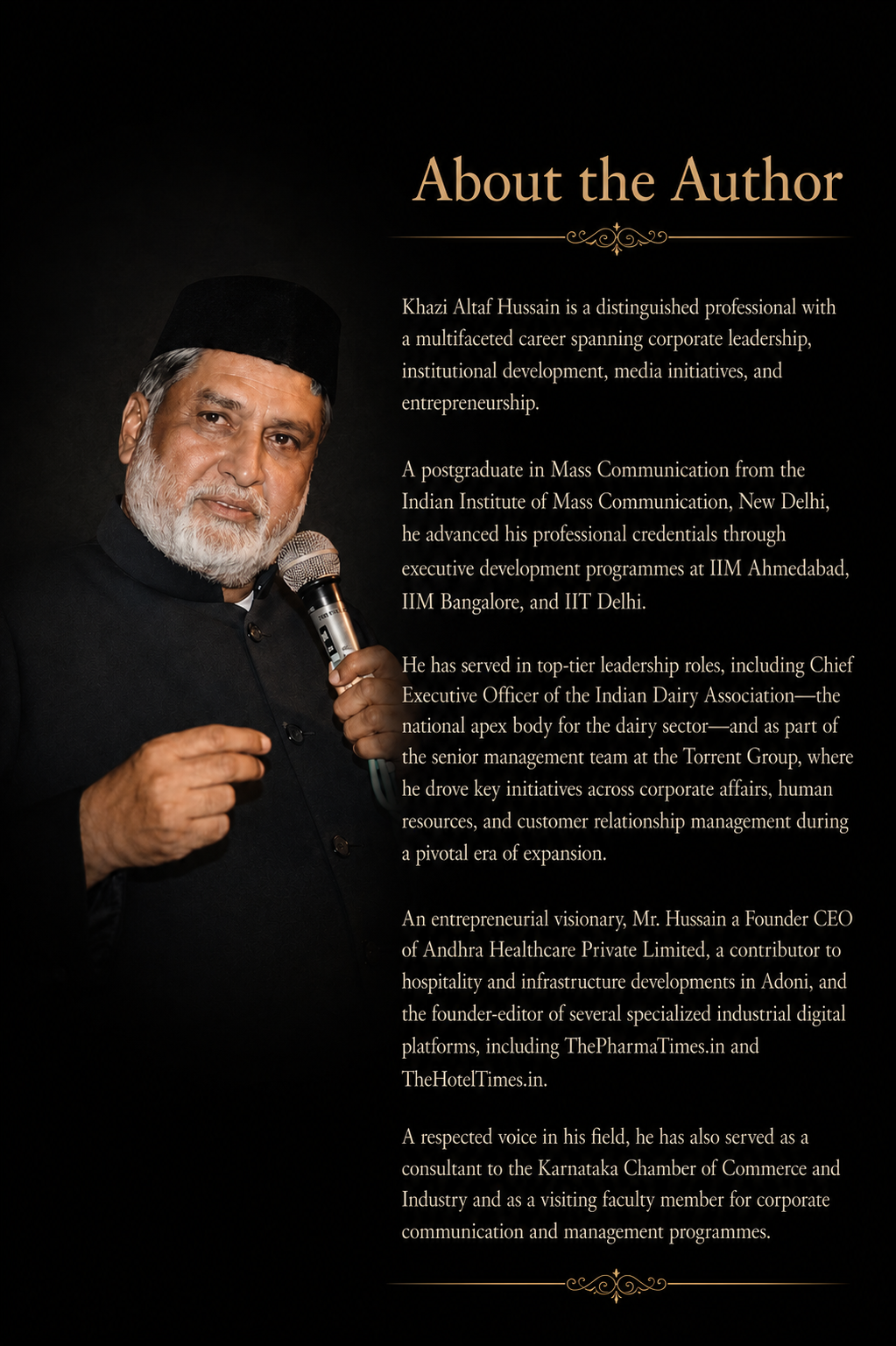
Autobiographies often become catalogues of achievements, positions, and chronology. A Life in Many Frames – Walking Through Fire: Fragments of Time consciously departs from that tradition. It is neither a conventional memoir nor a linear account of success. Instead, it is a reflective journey through experiences, relationships, institutions, crises, values, and moments that collectively shaped the life of its author, Khazi Altaf Hussain.
Written with sincerity and emotional restraint, the book unfolds through a series of “frames” rather than a strict chronology. The narrative moves seamlessly from childhood memories and educational struggles to journalism, corporate leadership, institution-building, healthcare entrepreneurship, public service, spirituality, and community engagement. Each chapter stands almost independently, yet together they form a coherent portrait of a life lived across multiple dimensions.
One of the strengths of the work lies in its authenticity. The author neither glorifies himself nor seeks sympathy. Successes and setbacks, recognition and adversity, professional accomplishments and personal pain are narrated with equal honesty. The chapters dealing with childhood memories, the Indian Institute of Mass Communication years, the Indian Dairy Association, corporate experiences at Torrent Group, humanitarian crises, and family challenges carry a rare emotional depth that makes the narrative relatable and human.
The book’s underlying theme is not ambition, but values. Throughout the narrative, certain ideas repeatedly emerge — trust, integrity, dignity, relationships, humility, and the importance of continuous learning. Leadership is presented not as authority, but as responsibility. Institutions are viewed not as structures, but as ecosystems built upon people and trust.
What distinguishes the book from many autobiographical works is its remarkable diversity. Few lives encompass journalism, dairy development, pharmaceuticals, power generation, healthcare, management education, social service, digital media, spirituality, and community leadership with equal commitment. The author’s association with national institutions and distinguished personalities enriches the narrative, yet the focus remains firmly upon lessons rather than personalities.
The language is simple, graceful, and conversational. There is no unnecessary intellectualism. Instead, the prose carries the warmth of lived experience and the wisdom of reflection. The numerous charcoal sketches and photographs further enhance the narrative by visually capturing emotions and memories that words alone sometimes cannot.
At its core, A Life in Many Frames is not merely the story of one individual. It is a story of post-Independence India itself — of small-town aspirations, educational opportunities, institutional growth, professional evolution, communal harmony, and the enduring belief that values ultimately matter more than positions.
The book will appeal not only to readers interested in memoirs, but also to young professionals, managers, students, institution builders, and anyone seeking inspiration from a life shaped by perseverance, service, and resilience.
Verdict
A Life in Many Frames – Walking Through Fire: Fragments of Time is a thoughtful, dignified, and deeply human autobiography. More than a record of achievements, it is a testament to the enduring power of relationships, values, and purposeful living.
“Life is remembered not merely through accomplishments, but through the trust earned, the values preserved, and the lives touched along the way.”
If I may say so, after having travelled with this manuscript from conception to completion, I would regard this book less as an autobiography and more as a social and institutional memoir of post-Independence India seen through the eyes of a participant rather than a spectator. That, in my opinion, gives it its distinctive character and lasting value.
Rating: ★★★★½ (4.5/5)
By Editorial Team